Field Hockey
NCAA Field Hockey Scholarships & Recruiting Hub (Updated for 2026)
Field Hockey Recruiting & Scholarship Resources for Parents and Athletes
Field hockey recruiting is one of the most competitive and misunderstood NCAA processes. With limited scholarship money, strict contact rules, and a heavy emphasis on academics, families who rely on assumptions or outdated advice often miss real opportunities.
This Field Hockey Recruiting & Scholarship Hub brings together expert guides, timelines, and practical resources to help parents and athletes understand how NCAA field hockey recruiting actually works — and how to approach it strategically from freshman year through commitment.
Below, you’ll find curated resources covering scholarships, recruiting rules, timelines, highlight videos, academic requirements, and common mistakes families make.
What You’ll Find in This Field Hockey Recruiting Hub
This category organizes the most important field hockey recruiting information in one place, including:
How NCAA field hockey scholarships work across Division I, II, III, Ivy League, NAIA, and JUCO
Current NCAA recruiting contact rules and timelines
What college field hockey coaches actually evaluate in recruits
How partial scholarships are structured and stacked with academic aid
When and how to create highlight videos coaches will watch
Common recruiting mistakes that quietly limit opportunities
In-depth guides for families who want a step-by-step system
Each section below summarizes the topic and links to deeper resources when you’re ready to go further.
NCAA Field Hockey Scholarships: How the System Really Works
NCAA field hockey is an equivalency sport, meaning coaches divide a set scholarship pool across an entire roster. Full scholarships are rare; most athletes receive partial awards combined with academic or need-based aid.
At a high level:
Division I programs typically split ~12 scholarships across rosters of 23–27 athletes
Division II programs have 6.3 scholarships per team
Division III and Ivy League schools do not offer athletic scholarships but recruit aggressively using merit and financial aid
NAIA programs can offer up to 12 scholarships with flexible distribution
JUCO programs vary and are often used as stepping stones
👉 Download the Playbook now to get the complete system, including templates, timelines, and insider breakdowns coaches don’t publish.
NCAA Recruiting Contact Rules for Field Hockey
Understanding when college coaches are allowed to communicate is critical — and misunderstanding these rules is one of the most common recruiting mistakes.
For NCAA field hockey:
June 15 after sophomore year: Coaches can begin calling, texting, and emailing recruits
September 1 of junior year: Expanded recruiting conversations, campus invitations, and verbal offers often begin
NAIA and JUCO programs are not bound by NCAA contact rules and may communicate earlier
Families who prepare before these dates are in a much stronger position when contact opens.
Link: NCAA Recruiting Contact Rules Explained
What College Field Hockey Coaches Look For
College coaches evaluate far more than highlight goals or club reputation. Across programs, recruiting decisions are driven by a combination of:
Position-specific impact (goalkeepers, defenders, midfielders, forwards)
Game IQ, decision-making, and consistency
Athleticism and speed
Academic strength (GPA directly affects scholarship flexibility)
Coachability, leadership, and reliability
Quality and clarity of highlight video
Programs with limited scholarship budgets prioritize recruits who strengthen both the roster and the academic profile.
👉 Related guide:
How College Coaches Scout & Recruit: The Tech Stack Explained
Field Hockey Recruiting Timeline (High-Level Overview)
Field hockey recruiting rewards early, organized families. While every athlete’s path is different, most successful recruits follow this general pattern:
Freshman Year: Build fundamentals, establish GPA, create a basic athletic resume
Sophomore Year: Update video, attend key tournaments, begin outreach (even if coaches can’t reply yet)
Junior Year: Critical evaluation year; June 15 contact opens; campus visits and early offers occur
Senior Year: Finalize options, compare aid packages, commit or pursue alternative pathways
Waiting until junior or senior year to “start recruiting” often limits options unnecessarily.
👉 Full roadmap:
The 4-Year NCAA Recruiting Timeline: What Parents Should Do Each Year
Partial vs. Full Scholarships: What Families Should Expect
Most field hockey recruits receive partial scholarships, not full rides. Coaches build aid packages by stacking:
Athletic scholarship dollars (where available)
Academic merit scholarships
Need-based financial aid
Institutional grants
Understanding how these pieces fit together allows families to focus on total cost, not just athletic aid.
👉 Deep dive:
How to Stack Scholarships in 2026: Athletic, Academic & Need-Based Aid
Highlight Videos That Actually Work
Highlight videos remain one of the most important recruiting tools — but most families do them incorrectly.
Effective field hockey videos:
Are concise (3–5 minutes)
Show decision-making, positioning, and off-ball movement
Are easy for coaches to access and review quickly
👉 Step-by-step guide:
How to Create Impact Videos NCAA Coaches Will Actually Watch (and Act On)
Common Field Hockey Recruiting Mistakes
These mistakes quietly derail many otherwise strong athletes:
Waiting too long to contact coaches
Submitting confusing or overly long highlight videos
Ignoring GPA and academic planning
Misunderstanding NCAA contact rules
Assuming club coaches will “handle recruiting”
Chasing labels instead of fit
Each of these is avoidable with the right information at the right time.
👉 Related resource:
10 Obscure (But Crucial) Facts Parents Don’t Realize About Recruiting
Want the Full System?
This hub explains how the field hockey recruiting landscape works.
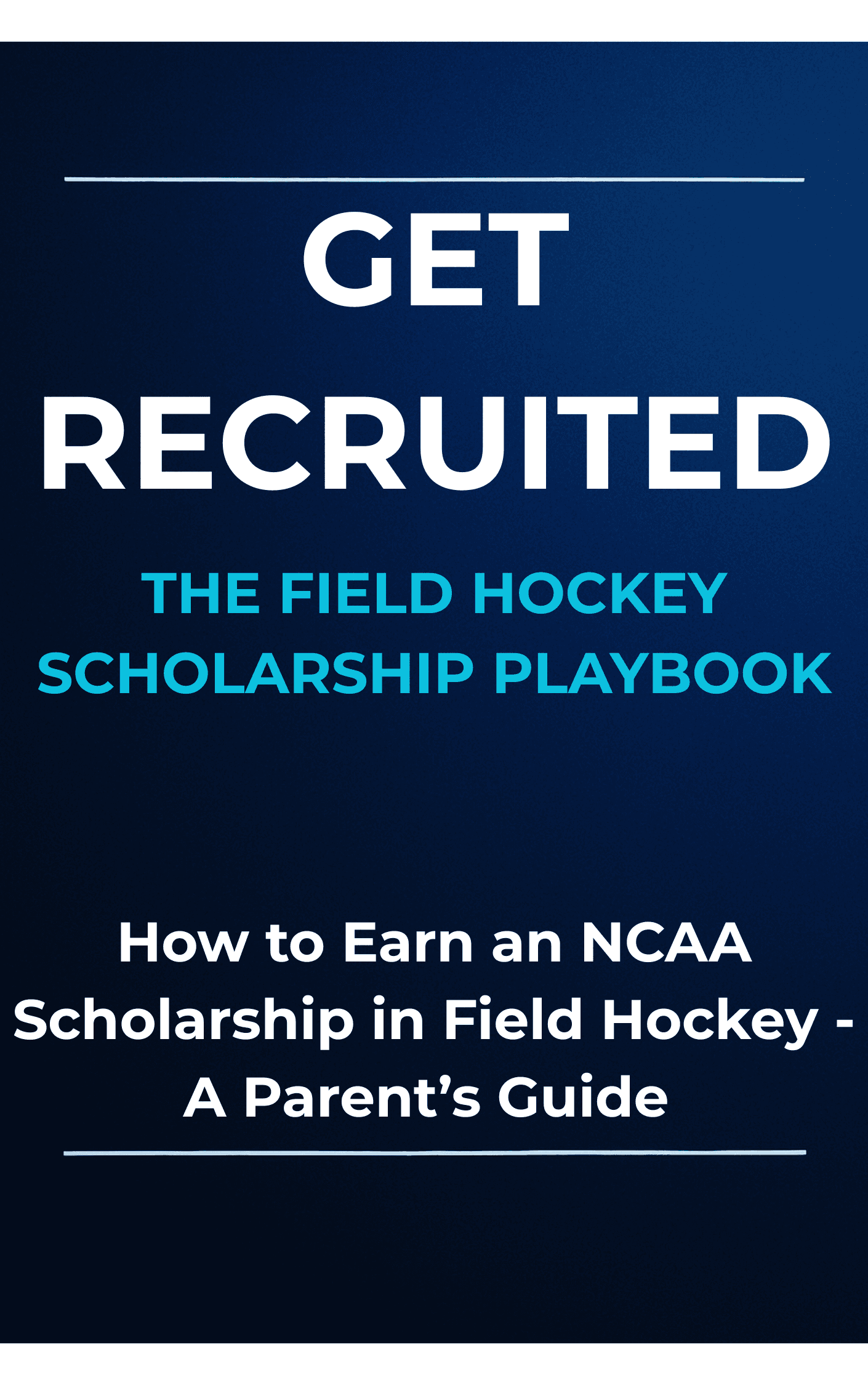
The Field Hockey Scholarship Playbook shows families how to execute, step by step — with timelines, templates, examples, and real-world strategy.
Inside the Playbook, you’ll find:
Grade-by-grade recruiting timelines
Coach outreach templates
Highlight video frameworks
Scholarship and aid planning tools
Campus visit preparation checklists
Backup pathways if recruiting shifts
👉 Explore the Field Hockey Scholarship Playbook
Start With the Right Information
Field hockey recruiting rewards families who understand the rules early and act deliberately. Use the guides in this category to build clarity, then dive deeper into individual topics as they become relevant to your athlete’s timeline.
NCAA Field Hockey Scholarships & Recruiting Hub (Updated for 2026)
Field Hockey Recruiting & Scholarship Resources for Parents and Athletes
Field hockey recruiting is one of the most competitive and misunderstood NCAA processes. With limited scholarship money, strict contact rules, and a heavy emphasis on academics, families who rely on assumptions or outdated advice often miss real opportunities.
This Field Hockey Recruiting & Scholarship Hub brings together expert guides, timelines, and practical resources to help parents and athletes understand how NCAA field hockey recruiting actually works — and how to approach it strategically from freshman year through commitment.
Below, you’ll find curated resources covering scholarships, recruiting rules, timelines, highlight videos, academic requirements, and common mistakes families make.
What You’ll Find in This Field Hockey Recruiting Hub
This category organizes the most important field hockey recruiting information in one place, including:
How NCAA field hockey scholarships work across Division I, II, III, Ivy League, NAIA, and JUCO
Current NCAA recruiting contact rules and timelines
What college field hockey coaches actually evaluate in recruits
How partial scholarships are structured and stacked with academic aid
When and how to create highlight videos coaches will watch
Common recruiting mistakes that quietly limit opportunities
In-depth guides for families who want a step-by-step system
Each section below summarizes the topic and links to deeper resources when you’re ready to go further.
NCAA Field Hockey Scholarships: How the System Really Works
NCAA field hockey is an equivalency sport, meaning coaches divide a set scholarship pool across an entire roster. Full scholarships are rare; most athletes receive partial awards combined with academic or need-based aid.
At a high level:
Division I programs typically split ~12 scholarships across rosters of 23–27 athletes
Division II programs have 6.3 scholarships per team
Division III and Ivy League schools do not offer athletic scholarships but recruit aggressively using merit and financial aid
NAIA programs can offer up to 12 scholarships with flexible distribution
JUCO programs vary and are often used as stepping stones
👉 Download the Playbook now to get the complete system, including templates, timelines, and insider breakdowns coaches don’t publish.
NCAA Recruiting Contact Rules for Field Hockey
Understanding when college coaches are allowed to communicate is critical — and misunderstanding these rules is one of the most common recruiting mistakes.
For NCAA field hockey:
June 15 after sophomore year: Coaches can begin calling, texting, and emailing recruits
September 1 of junior year: Expanded recruiting conversations, campus invitations, and verbal offers often begin
NAIA and JUCO programs are not bound by NCAA contact rules and may communicate earlier
Families who prepare before these dates are in a much stronger position when contact opens.
Link: NCAA Recruiting Contact Rules Explained
What College Field Hockey Coaches Look For
College coaches evaluate far more than highlight goals or club reputation. Across programs, recruiting decisions are driven by a combination of:
Position-specific impact (goalkeepers, defenders, midfielders, forwards)
Game IQ, decision-making, and consistency
Athleticism and speed
Academic strength (GPA directly affects scholarship flexibility)
Coachability, leadership, and reliability
Quality and clarity of highlight video
Programs with limited scholarship budgets prioritize recruits who strengthen both the roster and the academic profile.
👉 Related guide:
How College Coaches Scout & Recruit: The Tech Stack Explained
Field Hockey Recruiting Timeline (High-Level Overview)
Field hockey recruiting rewards early, organized families. While every athlete’s path is different, most successful recruits follow this general pattern:
Freshman Year: Build fundamentals, establish GPA, create a basic athletic resume
Sophomore Year: Update video, attend key tournaments, begin outreach (even if coaches can’t reply yet)
Junior Year: Critical evaluation year; June 15 contact opens; campus visits and early offers occur
Senior Year: Finalize options, compare aid packages, commit or pursue alternative pathways
Waiting until junior or senior year to “start recruiting” often limits options unnecessarily.
👉 Full roadmap:
The 4-Year NCAA Recruiting Timeline: What Parents Should Do Each Year
Partial vs. Full Scholarships: What Families Should Expect
Most field hockey recruits receive partial scholarships, not full rides. Coaches build aid packages by stacking:
Athletic scholarship dollars (where available)
Academic merit scholarships
Need-based financial aid
Institutional grants
Understanding how these pieces fit together allows families to focus on total cost, not just athletic aid.
👉 Deep dive:
How to Stack Scholarships in 2026: Athletic, Academic & Need-Based Aid
Highlight Videos That Actually Work
Highlight videos remain one of the most important recruiting tools — but most families do them incorrectly.
Effective field hockey videos:
Are concise (3–5 minutes)
Show decision-making, positioning, and off-ball movement
Are easy for coaches to access and review quickly
👉 Step-by-step guide:
How to Create Impact Videos NCAA Coaches Will Actually Watch (and Act On)
Common Field Hockey Recruiting Mistakes
These mistakes quietly derail many otherwise strong athletes:
Waiting too long to contact coaches
Submitting confusing or overly long highlight videos
Ignoring GPA and academic planning
Misunderstanding NCAA contact rules
Assuming club coaches will “handle recruiting”
Chasing labels instead of fit
Each of these is avoidable with the right information at the right time.
👉 Related resource:
10 Obscure (But Crucial) Facts Parents Don’t Realize About Recruiting
Want the Full System?
This hub explains how the field hockey recruiting landscape works.
The Field Hockey Scholarship Playbook shows families how to execute, step by step — with timelines, templates, examples, and real-world strategy.
Inside the Playbook, you’ll find:
Grade-by-grade recruiting timelines
Coach outreach templates
Highlight video frameworks
Scholarship and aid planning tools
Campus visit preparation checklists
Backup pathways if recruiting shifts
👉 Explore the Field Hockey Scholarship Playbook
Start With the Right Information
Field hockey recruiting rewards families who understand the rules early and act deliberately. Use the guides in this category to build clarity, then dive deeper into individual topics as they become relevant to your athlete’s timeline.

Stay Ahead of the Game — Join our Parent Insider List
Get expert tips, NCAA recruiting insights, and early access to new guides — straight to your inbox.
Your privacy is important to us. You'll only receive valuable content and updates from us.
Stay Ahead of the Game — Join our Parent Insider List
Get expert tips, NCAA recruiting insights, and early access to new guides — straight to your inbox.
Your privacy is important to us. You'll only receive valuable content and updates from us.
Stay Ahead of the Game — Join our Parent Insider List
Get expert tips, NCAA recruiting insights, and early access to new guides — straight to your inbox.
Your privacy is important to us. You'll only receive valuable content and updates from us.