Field Hockey
NCAA Field Hockey Scholarships: The Definitive Parent Guide for 2026–27
What You'll Learn in This Resource
How the House v. NCAA settlement restructured Division I field hockey from a 12-equivalency cap to a 27-athlete roster limit — and what that actually means for the offers your athlete will receive.
Why NAIA and NJCAA are not viable field hockey pathways — and what that does to the real universe of programs available.
The geographic concentration problem: why the majority of D1 field hockey programs sit in one region of the country, and how that shapes your recruiting strategy.
What coaches evaluate by position — and why a midfielder who can play forward and corner specialist is worth more on a 27-player roster than a one-dimensional player with higher raw ability.
The specific speed, fitness, and technical benchmarks coaches use across D1, D2, and D3 levels.
When D1 coaches are legally permitted to contact recruits and what you can do before that date.
The complete grade-by-grade recruiting timeline, from freshman year through signing day.
How to stack athletic, academic, and need-based aid at programs where 6.3 equivalency scholarships stretch across 20+ athletes.
Key Facts Parents Overlook About Collegiate Field Hockey Recruiting
📌 The Program Universe Is Smaller Than You Think — and Regionally Concentrated. There are approximately 280 NCAA-sponsored college field hockey programs across all three divisions. The overwhelming majority are located in the Northeast, Mid-Atlantic, and Midwest. There are four programs in California. Zero in the South or Mountain West at significant scale. If your athlete is based in Texas, Florida, or the Pacific Northwest, you are already recruiting outside your geography. Understanding that before you build your target list saves you 18 months of misdirected outreach.
📌 NAIA and NJCAA Do Not Sponsor Field Hockey. Unlike most college sports, field hockey is not sponsored at the varsity level by either the NAIA or NJCAA. Field hockey exists as a club sport at some of those schools, but no athletic scholarships are available through those pathways. The real recruiting universe for scholarship opportunities is NCAA Division I and Division II only.
📌 The 27-Roster Limit Is Not a 27-Scholarship Guarantee. Under the House v. NCAA settlement effective July 1, 2025, D1 field hockey moved from a 12-equivalency cap to a 27-athlete roster limit. Any or all of those 27 athletes may receive athletic aid — but programs are not required to fund all 27 spots. Institutional athletic budgets, not NCAA mandates, determine how much aid is actually distributed. Many programs will distribute the same total dollar amount they funded before, now spread across a larger roster. Individual awards thin out accordingly.
📌 D2's 6.3 Equivalencies Across 20+ Athletes Is a Math Problem Families Ignore. A fully funded D2 field hockey program has 6.3 scholarship equivalencies to distribute across a roster that typically carries 20–24 athletes. That averages roughly 0.26 to 0.31 equivalencies per athlete. If you receive a D2 "scholarship offer," ask the coach immediately what percentage of cost of attendance it represents and how that number was calculated. Most D2 partial awards are in the 15–40% range. The gap between the offer and the tuition bill is filled by academic merit and need-based aid — or by your family.
📌 Early Recruiting Happens Before Coaches Can Legally Talk to You. D1 field hockey coaches cannot initiate recruiting contact until June 15 after an athlete's sophomore year. What they can do before that date: attend club tournaments, evaluate film, build prospect lists, and communicate with club coaches. Coaches are actively sorting recruits in 8th and 9th grade based on club tournament performance. The first conversation is happening without your athlete present.
📌 Position Fit Matters More Than Raw Athletic Ability. A program carrying 27 athletes on a roster manages specific positional needs across forwards, midfielders, defenders, and a goalkeeper. A coach who has three experienced forwards returning and two more committed in the incoming class has no roster logic for adding a fourth forward — regardless of her ability. Understanding what gaps exist in a program's current and committed roster before reaching out is a competitive advantage almost no family exercises.
📌 Corner Specialists Punch Above Their Weight. Drag flick ability on penalty corners is one of the most roster-scarce and highest-leverage skills in collegiate field hockey. A player who can reliably execute a penalty corner drag flick at the collegiate speed and angle — consistently, under pressure — is a functional asset that directly translates to scoring opportunities. Coaches at programs that lack this skill will recruit specifically for it.
NCAA Field Hockey Scholarship Structure: 2026–27
Division | Scholarship / Funding Model | Notes |
|---|---|---|
NCAA Division I | Up to 27 rostered athletes eligible for full or partial scholarships | 27-athlete roster limit effective July 1, 2025 under House settlement. No fixed dollar amount mandated. Previous cap was 12 equivalencies. Not all programs will fully fund 27 spots. |
NCAA Division II | 6.3 equivalency scholarships | Unchanged by House settlement. Partial awards dominate — split across typical rosters of 20–24 athletes. |
NCAA Division III | 0 | No athletic aid permitted by rule. Academic, merit, and need-based aid only — some D3 programs offer institutional packages that are competitive with D2 partial athletic awards. |
NAIA | Not applicable | NAIA does not sponsor field hockey as a varsity championship sport. No athletic scholarships available through this pathway. |
NJCAA | Not applicable | NJCAA does not sponsor field hockey. No scholarship pathway at the junior college level. |
👉 How to Get a Field Hockey Scholarship in the U.S. — scholarship distribution in plain language, with coach quotes and program-level context.
The Geographic Reality of Field Hockey Programs
This is the single most under-discussed structural factor in field hockey recruiting, and it directly affects where your athlete can realistically compete.
NCAA D1 field hockey — approximately 82 programs — by region:
The Northeast and Mid-Atlantic corridor (New England, New York, Pennsylvania, Maryland, New Jersey, Virginia) accounts for the significant majority of D1 programs. The ACC, Big Ten, Ivy League, Patriot League, and America East conferences are clustered almost entirely in this corridor. The Pacific Coast and Mountain West regions have a small number of programs under the Northern Pacific Field Hockey Conference.
What this means for recruiting:
Athletes who live and train in the Northeast/Mid-Atlantic corridor have natural geographic access to club tournaments that D1 coaches attend regularly. Athletes from outside this corridor — Midwest, South, California, Canada — need to deliberately travel to the club tournament circuit where D1 coaches are evaluating. A club team that travels to NFHCA events, JO Cup, or Premier Hockey Federation showcases gives athletes outside the core geography visibility they will not get from their regional circuit alone.
D3 is a different map. There are approximately 168 D3 field hockey programs, and they are heavily concentrated in New England and the Mid-Atlantic — particularly in New York, Pennsylvania, Massachusetts, Connecticut, and New Jersey. If an athlete is targeting D3, the academic selectivity of these schools matters as much as athletic fit. Many of the strongest D3 programs — Williams, Middlebury, Amherst, Bowdoin — sit inside the NESCAC, where institutional aid packages are substantial.
Performance Benchmarks: What Levels Require
Field hockey does not have a universal verified database equivalent to SwimCloud or Orion. Coaches evaluate recruits primarily through live tournament observation and highlight video. That makes tournament selection and consistent performance across a high-visibility club season the primary data source coaches use.
Speed and fitness benchmarks by division:
Metric | NCAA D1 Competitive Range | NCAA D2 Range | NCAA D3 Range |
|---|---|---|---|
40-yard dash | Sub-5.2 seconds | 5.2–5.5 seconds | 5.4–5.7 seconds |
Beep test (aerobic capacity) | Level 12+ | Level 10–12 | Level 8–11 |
100-yard dash | Under 14.0 seconds | 14.0–15.5 seconds | 15.0–16.5 seconds |
⚠️ Flagged: These ranges are drawn from recruiting profile guidance and coach-sourced benchmarks, not a single authoritative published standard. They represent commonly cited ranges, not NCAA-mandated cutoffs. Individual program standards vary. Use these as orientation benchmarks, not absolute thresholds.
Technical benchmarks coaches assess:
Ball control at full sprint speed — can the athlete maintain possession while accelerating past a defender?
Pass accuracy at distance — 85%+ completion rate on 25-yard+ passes under match conditions is a commonly cited benchmark at the D1 level.
Tackle completion in defensive situations — consistency and physicality in 1v1 defensive reads.
Specialty skills — drag flick execution, aerial trapping, and penalty corner insertion and blocking roles.
First touch quality under pressure — how quickly an athlete receives and transitions with the ball in a competitive game environment.
👉 Position-Specific Recruiting: Midfielder vs. Defender vs. Forward — a full breakdown of how your position shapes your recruiting profile, outreach strategy, and scholarship value to a program.
What Coaches Actually Evaluate — By Position
Forwards
Primary: Finishing under pressure, 1v1 speed and decision-making in the attacking circle, ability to create space for themselves and teammates. Coaches watch for athletes who can score from multiple angles inside the circle — not just penalty corners.
Secondary: Press trigger discipline. D1 forwards are expected to initiate the press correctly and consistently. An athlete who presses out of position burns defensive structure regardless of how well they finish.
Midfielders
Primary: Field vision and transition speed — both physical and cognitive. Midfielders are evaluated on how quickly they make decisions under pressure, not just whether the decisions are correct. D1 midfields operate at a pace where a half-second of hesitation creates turnovers.
High value: Versatility across central and wide midfielder roles. A midfielder who can also play a forward position in pressing schemes, or drop to a defensive mid in different formations, gives a coach strategic flexibility on a 27-player roster. This is a roster currency coaches actively recruit for.
Defenders
Primary: 1v1 aerial and ground ball defending, positioning discipline, ability to win the ball and distribute cleanly under pressure. Coaches evaluate whether the athlete is reactive or anticipatory — the best D1 defenders read the play before the ball arrives.
Secondary: Distribution quality. A defender who wins the ball but distributes it poorly resets the defensive problem on the next possession. Coaches watch how defenders move the ball out of the defensive third, not just how they win it.
Goalkeepers
Primary: Footwork, post-to-post movement speed, and penalty corner blocking consistency. Goalkeepers are evaluated heavily on penalty corner execution because the statistical frequency of penalty corners in collegiate field hockey makes this a high-leverage skill.
Secondary: Communication and defensive organization. A goalkeeper who directs the defense, calls positioning, and controls the penalty circle earns more roster value than one who is only evaluated on save percentage.
Corner specialists (all positions)
Drag flick ability is rare enough and high-leverage enough that coaches recruit specifically for it. An athlete who can reliably execute a penalty corner drag flick at collegiate speed with accuracy to multiple targets — not just the near post — is worth more to a program than their individual position ranking alone would indicate.
When Can College Coaches Contact You?
Division | First Legal Direct Contact | Key Details |
|---|---|---|
NCAA Division I | June 15 after sophomore year | Before this date: coaches may send camp brochures, non-athletic publications, and NCAA educational materials. They cannot send recruiting materials, initiate calls, texts, emails, or direct messages, or extend verbal offers. Athletes can email coaches at any time. |
NCAA Division II | Anytime | No contact restrictions. Coaches can call, text, and email at any time. In-person off-campus contact follows the same timeline as D1 — limited until June 15 after sophomore year. |
NCAA Division III | Anytime | No formal recruiting restrictions. Most programs wait until junior year but can communicate earlier. |
August 1 before junior year: D1 athletes can begin scheduling official and unofficial campus visits. Off-campus coach contact begins. Verbal scholarship offers permitted from June 15 onward.
The rule most families miss: Athletes can email D1 coaches at any grade level. The restriction is on the coach's ability to reply — not the athlete's ability to write. A freshman who sends a well-structured email with a highlight video link, verified tournament results, and a personalized program reference is not violating any rule. They are establishing a documented paper trail that coaches see the moment they are legally permitted to respond on June 15 after sophomore year.
Grade-by-Grade Recruiting Timeline
⬜ Freshman Year (Grade 9)
Focus: Academic foundation and club team selection.
Every freshman-year course is part of your NCAA core course GPA. There are no revisions after the fact.
👉 Field Hockey Scholarship Requirements: GPA, Eligibility Center & SAT/ACT — what the NCAA actually counts, what coaches expect, and how to avoid eligibility mistakes.
Join a club team that competes at nationally visible tournaments — NFHCA events, Premier League events, or regional showcases where D1 and D2 coaches evaluate recruits. Your high school team builds fitness and IQ. Your club team builds your recruiting profile.
Begin a simple tracking spreadsheet: tournament name, result, individual performance notes, any coach observations or conversations.
Understand your positional identity. Coaches recruit for specific roster gaps — knowing what position you play and why you are valuable in that role is foundational to every outreach email you will write later.
⬜ Sophomore Year (Grade 10)
Focus: Build outreach infrastructure and begin coach contact.
Register with the NCAA Eligibility Center (ncaa.org). Get your ID number. Do this regardless of which division level you're targeting.
Build a recruiting profile on a platform coaches use — FieldLevel is the most widely used in field hockey. Upload your highlight video and keep it current.
Draft your first recruiting email: position, graduation year, club team, tournament results, GPA, a specific reason you're reaching out to that program. Send it. D1 coaches cannot legally reply until June 15, but they read their email.
Build a target list of 20–30 programs across D1, D2, and D3 that match your current ability level, your academic profile, and your geographic preferences. Map those programs against their conference affiliation and recruiting region.
June 15 after sophomore year: D1 coaches can now reply. Have updated tournament results ready. Follow up on every email you sent before this date.
⬜ Junior Year (Grade 11)
Focus: The volume year. Active multi-channel communication, campus visits, and offer comparison.
Send coach updates every 8–10 weeks: tournament results, any recognition, new film. Keep them to four or five sentences.
August 1: Begin scheduling official and unofficial campus visits. Use your five official visits (limited by NCAA rule) on your highest-priority programs.
Request your high school counselor upload official transcripts to the NCAA Eligibility Center portal.
Early Signing Period (typically mid-November): Athletes who commit during this window sign their NLI and lock in their aid package. Be prepared to make a decision — programs will pressure timelines.
Compare offers using net cost, not headline athletic scholarship percentage. Total cost of attendance minus all aid is the number that matters.
⬜ Senior Year (Grade 12)
Focus: Close the decision and complete financial paperwork.
File FAFSA immediately when it opens. Need-based institutional aid at many schools is awarded first-come.
Submit CSS Profile for private institutions — many academically strong D3 programs require it and distribute substantial institutional grant aid through it.
Complete NCAA Eligibility Center amateurism certification. Confirm core course count and GPA meet minimum eligibility standards before your first semester.
Sign NLI or issue verbal commitment. Verbal commitments are non-binding; NLI signatures are binding.
The Aid Stacking Scenario: Why D3 Beats D2 for Some Families
The assumption that D2 athletic aid is always more valuable than D3 academic aid fails when you run the actual net cost numbers at specific institutions.
Example scenario — D2 program, total cost of attendance: $42,000/year
Aid Source | Amount |
|---|---|
Athletic scholarship offer (partial, ~25%) | $10,500 |
Academic merit award (3.6 GPA) | $8,000 |
Need-based institutional grant (FAFSA filed early) | $7,000 |
Net annual out-of-pocket | $16,500 |
Comparison — D3 program (NESCAC or similar), cost of attendance: $78,000/year
Aid Source | Amount |
|---|---|
Athletic scholarship | $0 (D3 rule) |
Academic merit award (3.8 GPA) | $20,000 |
Need-based institutional grant (CSS Profile, high EFC) | $35,000 |
Net annual out-of-pocket | $23,000 |
Different scenario — same D3 school, lower family income
Aid Source | Amount |
|---|---|
Need-based institutional grant | $55,000 |
Academic merit award | $15,000 |
Net annual out-of-pocket | $8,000 |
The D3 path closes faster for families with need than the D2 path does for most athletes with a partial athletic offer. Run every offer as a net cost calculation — not a scholarship percentage.
Common Mistakes Field Hockey Families Make
❌ Targeting programs by U.S. News ranking instead of conference fit. A family that is chasing "D1" as a brand rather than evaluating which specific programs actually need the position their athlete plays is misdirecting years of recruiting effort. An athlete who fits an America East or Big West program's current roster gap will receive more offers, more aid, and more playing time than the same athlete waiting on a response from an ACC program where the position is filled for three more recruiting classes.
❌ Skipping club tournaments outside your region. Field hockey coach evaluations happen at club tournaments, not high school games. If your club team does not travel to tournaments where D1 coaches are physically present and watching, your athlete is invisible regardless of her ability level. This is the most common single reason regionally talented players go un-recruited at the D1 level.
❌ Sending a highlight video without verified competition context. A video of a player making clean touches against weak competition tells a coach nothing useful. Coaches want to see game film from high-level tournaments — NFHCA showcases, regional qualifiers, state championship play. The competition level in the background of the video is part of the evaluation, not just the athlete.
❌ Letting a parent send the recruiting emails. Coaches filter for athlete maturity and communication independence. An email sent from a parent's address signals that the athlete cannot advocate for herself in a college environment. The athlete writes and sends every email — from her own address, in her own voice.
❌ Committing to the first program that shows interest. Early interest from a coach is not a scholarship offer. It is an expression of general interest. Families who treat a coaching staff's initial contact as validation — and stop actively recruiting other programs — give up significant negotiating leverage on aid packages and eliminate options before they understand the full landscape.
❌ Ignoring D3 programs with strong institutional aid. The assumption that D3 means "no money" is incorrect and expensive. Many of the most academically selective D3 programs in field hockey — particularly in the NESCAC and Middle Atlantic Conferences — distribute institutional grant packages that net lower than comparable D2 offers for families with demonstrated need. Run the numbers before dismissing the division.
Frequently Asked Questions
Is field hockey available at NAIA or JUCO programs? No. Neither the NAIA nor the NJCAA sponsors field hockey as a varsity championship sport. Field hockey exists as a club sport at some member schools, but no athletic scholarships are available through those pathways. The scholarship universe for field hockey is NCAA Division I and Division II only.
How important is a highlight video in field hockey recruiting? More important than in swimming, less determinative than in soccer or lacrosse. Coaches make decisions based primarily on live evaluation at club tournaments. A highlight video serves as the initial screening tool that earns a coach's attention before they see you in person — not as the final evaluation. Keep it under five minutes. Lead with your best footage. Label your position, graduation year, and club team at the top. Show game situations, not just skills training.
How many D1 field hockey programs are there and where are they? Approximately 82 NCAA Division I programs as of 2025–26. The large majority are in the Northeast, Mid-Atlantic, and Midwest corridors. There are four programs in California. The ACC, Big Ten, Ivy League, Patriot League, and America East conferences represent the majority of D1 programs by number.
Can international athletes earn field hockey scholarships? Yes. International players — particularly from the Netherlands, Germany, Belgium, Argentina, Australia, and Great Britain — represent a significant share of D1 rosters at power programs. Additional requirements: register with the NCAA Eligibility Center's international process, submit translated transcripts through an approved credential evaluation service, and verify that competition history is sanctioned by the relevant national federation. Programs at Duke, North Carolina, Stanford, and similar schools recruit internationally as a primary strategy, not a secondary one.
What is the Early Signing Period for field hockey? The Early Signing Period for field hockey typically runs in mid-November of an athlete's senior year (November 12–19 in 2025 for 2026 grads — confirm exact dates with NCAA for your graduation year). Athletes who sign their NLI during this period lock in their aid package. The Regular Signing Period runs through August 1 of the following year.
What GPA do I need to be eligible? The NCAA Eligibility Center requires a minimum 2.3 core course GPA on a sliding scale with standardized test scores for Division I clearance (2.2 for Division II). These are minimums — most competitive programs expect significantly higher. A core course GPA below 3.0 raises academic risk flags at programs that are managing graduation success rate metrics. A GPA above 3.5 opens academic merit aid that meaningfully reduces net cost at virtually every institution.
Additional Resources
How to Contact College Coaches: Field Hockey-Specific Outreach Templates
Campus Visits Explained: Official vs. Unofficial, What to Ask, What to Observe
Financial Aid Beyond Athletics: FAFSA, CSS Profile, and Merit Aid Stacking for Recruits
International Athletes: Eligibility, Transcript Submission, and Recruiting for Non-U.S. Players
NCAA Recruiting Contact Dates 2026–27: What Field Hockey Athletes Need to Know
Grades First: A Parent's Guide to NCAA Core Courses, Pre-Reads, and the Academic Index
Build the System That Closes the Offer
Field hockey recruiting is not a discovery sport. Coaches are not scanning high school rosters for undiscovered talent. They are attending specific club tournaments, tracking athletes they've already seen, and filling specific positional gaps on a roster they've been planning for 18 months.
The athletes who receive offers are not uniformly the most talented players in their graduation year. They are the players who showed up at the right tournaments, reached out at the right time, maintained consistent communication, and gave coaches a roster reason to make the call.
That's the operating system the Field Hockey Scholarship Playbook is built around.
Inside, you get:
📅 The Complete Grade-by-Grade Recruiting Checklist — every athletic, academic, and communication milestone from freshman year through NLI signing day.
🗺️ Program Geography Tracker — map D1, D2, and D3 programs by conference, region, and roster fit against your athlete's position and ability level.
🧭 Coach Contact & Tournament Tracker — manage outreach across 20–30 programs, log coach contact at tournaments, and track which programs are actively evaluating your athlete.
🎥 Highlight Video Blueprint — position-specific filming guidelines, competition context labeling instructions, and the sequencing coaches actually use to evaluate recruits at the D1 and D2 level.
📊 Position Fit & Roster Gap Analyzer — evaluate each target program's current roster by position to identify genuine recruiting gaps before you spend time on outreach.
💰 Aid Stacking Calculator — map athletic, academic, and need-based aid across competing D1, D2, and D3 offers to calculate true net annual cost.
🗂️ Eligibility & Academic Planner — track core course counts and GPA against NCAA minimums so you do not arrive at clearance with a surprise.
🌍 International Athlete Supplement — transcript submission, credential evaluation, and Eligibility Center navigation for athletes competing outside the United States.
All templates are built directly from NCAA guidelines and verified recruiting data. No speculation. No advice that applies equally to every sport. Just the specific structure that field hockey recruiting actually requires.
👉 Download the Field Hockey Scholarship Playbook and start building the system that puts your athlete on the right rosters.
Sources: NCAA Division I Board of Directors Roster Limit Adoption (July 2025); House v. NCAA Settlement Final Approval (June 6, 2025); NCSA Field Hockey Scholarships and Recruiting Rules (2025–26); ScholarshipStats.com Field Hockey (2025–26); NFHCA Program Expansion Report (2025); U.S. Sports Scholarships Field Hockey Guide; FieldLevel Performance Metrics Documentation; Crimson Athletics Field Hockey Recruiting Standards.
Field Hockey
NCAA Field Hockey Scholarships: The Definitive Parent Guide for 2026–27
What You'll Learn in This Resource
How the House v. NCAA settlement restructured Division I field hockey from a 12-equivalency cap to a 27-athlete roster limit — and what that actually means for the offers your athlete will receive.
Why NAIA and NJCAA are not viable field hockey pathways — and what that does to the real universe of programs available.
The geographic concentration problem: why the majority of D1 field hockey programs sit in one region of the country, and how that shapes your recruiting strategy.
What coaches evaluate by position — and why a midfielder who can play forward and corner specialist is worth more on a 27-player roster than a one-dimensional player with higher raw ability.
The specific speed, fitness, and technical benchmarks coaches use across D1, D2, and D3 levels.
When D1 coaches are legally permitted to contact recruits and what you can do before that date.
The complete grade-by-grade recruiting timeline, from freshman year through signing day.
How to stack athletic, academic, and need-based aid at programs where 6.3 equivalency scholarships stretch across 20+ athletes.
Key Facts Parents Overlook About Collegiate Field Hockey Recruiting
📌 The Program Universe Is Smaller Than You Think — and Regionally Concentrated. There are approximately 280 NCAA-sponsored college field hockey programs across all three divisions. The overwhelming majority are located in the Northeast, Mid-Atlantic, and Midwest. There are four programs in California. Zero in the South or Mountain West at significant scale. If your athlete is based in Texas, Florida, or the Pacific Northwest, you are already recruiting outside your geography. Understanding that before you build your target list saves you 18 months of misdirected outreach.
📌 NAIA and NJCAA Do Not Sponsor Field Hockey. Unlike most college sports, field hockey is not sponsored at the varsity level by either the NAIA or NJCAA. Field hockey exists as a club sport at some of those schools, but no athletic scholarships are available through those pathways. The real recruiting universe for scholarship opportunities is NCAA Division I and Division II only.
📌 The 27-Roster Limit Is Not a 27-Scholarship Guarantee. Under the House v. NCAA settlement effective July 1, 2025, D1 field hockey moved from a 12-equivalency cap to a 27-athlete roster limit. Any or all of those 27 athletes may receive athletic aid — but programs are not required to fund all 27 spots. Institutional athletic budgets, not NCAA mandates, determine how much aid is actually distributed. Many programs will distribute the same total dollar amount they funded before, now spread across a larger roster. Individual awards thin out accordingly.
📌 D2's 6.3 Equivalencies Across 20+ Athletes Is a Math Problem Families Ignore. A fully funded D2 field hockey program has 6.3 scholarship equivalencies to distribute across a roster that typically carries 20–24 athletes. That averages roughly 0.26 to 0.31 equivalencies per athlete. If you receive a D2 "scholarship offer," ask the coach immediately what percentage of cost of attendance it represents and how that number was calculated. Most D2 partial awards are in the 15–40% range. The gap between the offer and the tuition bill is filled by academic merit and need-based aid — or by your family.
📌 Early Recruiting Happens Before Coaches Can Legally Talk to You. D1 field hockey coaches cannot initiate recruiting contact until June 15 after an athlete's sophomore year. What they can do before that date: attend club tournaments, evaluate film, build prospect lists, and communicate with club coaches. Coaches are actively sorting recruits in 8th and 9th grade based on club tournament performance. The first conversation is happening without your athlete present.
📌 Position Fit Matters More Than Raw Athletic Ability. A program carrying 27 athletes on a roster manages specific positional needs across forwards, midfielders, defenders, and a goalkeeper. A coach who has three experienced forwards returning and two more committed in the incoming class has no roster logic for adding a fourth forward — regardless of her ability. Understanding what gaps exist in a program's current and committed roster before reaching out is a competitive advantage almost no family exercises.
📌 Corner Specialists Punch Above Their Weight. Drag flick ability on penalty corners is one of the most roster-scarce and highest-leverage skills in collegiate field hockey. A player who can reliably execute a penalty corner drag flick at the collegiate speed and angle — consistently, under pressure — is a functional asset that directly translates to scoring opportunities. Coaches at programs that lack this skill will recruit specifically for it.
NCAA Field Hockey Scholarship Structure: 2026–27
Division | Scholarship / Funding Model | Notes |
|---|---|---|
NCAA Division I | Up to 27 rostered athletes eligible for full or partial scholarships | 27-athlete roster limit effective July 1, 2025 under House settlement. No fixed dollar amount mandated. Previous cap was 12 equivalencies. Not all programs will fully fund 27 spots. |
NCAA Division II | 6.3 equivalency scholarships | Unchanged by House settlement. Partial awards dominate — split across typical rosters of 20–24 athletes. |
NCAA Division III | 0 | No athletic aid permitted by rule. Academic, merit, and need-based aid only — some D3 programs offer institutional packages that are competitive with D2 partial athletic awards. |
NAIA | Not applicable | NAIA does not sponsor field hockey as a varsity championship sport. No athletic scholarships available through this pathway. |
NJCAA | Not applicable | NJCAA does not sponsor field hockey. No scholarship pathway at the junior college level. |
👉 How to Get a Field Hockey Scholarship in the U.S. — scholarship distribution in plain language, with coach quotes and program-level context.
The Geographic Reality of Field Hockey Programs
This is the single most under-discussed structural factor in field hockey recruiting, and it directly affects where your athlete can realistically compete.
NCAA D1 field hockey — approximately 82 programs — by region:
The Northeast and Mid-Atlantic corridor (New England, New York, Pennsylvania, Maryland, New Jersey, Virginia) accounts for the significant majority of D1 programs. The ACC, Big Ten, Ivy League, Patriot League, and America East conferences are clustered almost entirely in this corridor. The Pacific Coast and Mountain West regions have a small number of programs under the Northern Pacific Field Hockey Conference.
What this means for recruiting:
Athletes who live and train in the Northeast/Mid-Atlantic corridor have natural geographic access to club tournaments that D1 coaches attend regularly. Athletes from outside this corridor — Midwest, South, California, Canada — need to deliberately travel to the club tournament circuit where D1 coaches are evaluating. A club team that travels to NFHCA events, JO Cup, or Premier Hockey Federation showcases gives athletes outside the core geography visibility they will not get from their regional circuit alone.
D3 is a different map. There are approximately 168 D3 field hockey programs, and they are heavily concentrated in New England and the Mid-Atlantic — particularly in New York, Pennsylvania, Massachusetts, Connecticut, and New Jersey. If an athlete is targeting D3, the academic selectivity of these schools matters as much as athletic fit. Many of the strongest D3 programs — Williams, Middlebury, Amherst, Bowdoin — sit inside the NESCAC, where institutional aid packages are substantial.
Performance Benchmarks: What Levels Require
Field hockey does not have a universal verified database equivalent to SwimCloud or Orion. Coaches evaluate recruits primarily through live tournament observation and highlight video. That makes tournament selection and consistent performance across a high-visibility club season the primary data source coaches use.
Speed and fitness benchmarks by division:
Metric | NCAA D1 Competitive Range | NCAA D2 Range | NCAA D3 Range |
|---|---|---|---|
40-yard dash | Sub-5.2 seconds | 5.2–5.5 seconds | 5.4–5.7 seconds |
Beep test (aerobic capacity) | Level 12+ | Level 10–12 | Level 8–11 |
100-yard dash | Under 14.0 seconds | 14.0–15.5 seconds | 15.0–16.5 seconds |
⚠️ Flagged: These ranges are drawn from recruiting profile guidance and coach-sourced benchmarks, not a single authoritative published standard. They represent commonly cited ranges, not NCAA-mandated cutoffs. Individual program standards vary. Use these as orientation benchmarks, not absolute thresholds.
Technical benchmarks coaches assess:
Ball control at full sprint speed — can the athlete maintain possession while accelerating past a defender?
Pass accuracy at distance — 85%+ completion rate on 25-yard+ passes under match conditions is a commonly cited benchmark at the D1 level.
Tackle completion in defensive situations — consistency and physicality in 1v1 defensive reads.
Specialty skills — drag flick execution, aerial trapping, and penalty corner insertion and blocking roles.
First touch quality under pressure — how quickly an athlete receives and transitions with the ball in a competitive game environment.
👉 Position-Specific Recruiting: Midfielder vs. Defender vs. Forward — a full breakdown of how your position shapes your recruiting profile, outreach strategy, and scholarship value to a program.
What Coaches Actually Evaluate — By Position
Forwards
Primary: Finishing under pressure, 1v1 speed and decision-making in the attacking circle, ability to create space for themselves and teammates. Coaches watch for athletes who can score from multiple angles inside the circle — not just penalty corners.
Secondary: Press trigger discipline. D1 forwards are expected to initiate the press correctly and consistently. An athlete who presses out of position burns defensive structure regardless of how well they finish.
Midfielders
Primary: Field vision and transition speed — both physical and cognitive. Midfielders are evaluated on how quickly they make decisions under pressure, not just whether the decisions are correct. D1 midfields operate at a pace where a half-second of hesitation creates turnovers.
High value: Versatility across central and wide midfielder roles. A midfielder who can also play a forward position in pressing schemes, or drop to a defensive mid in different formations, gives a coach strategic flexibility on a 27-player roster. This is a roster currency coaches actively recruit for.
Defenders
Primary: 1v1 aerial and ground ball defending, positioning discipline, ability to win the ball and distribute cleanly under pressure. Coaches evaluate whether the athlete is reactive or anticipatory — the best D1 defenders read the play before the ball arrives.
Secondary: Distribution quality. A defender who wins the ball but distributes it poorly resets the defensive problem on the next possession. Coaches watch how defenders move the ball out of the defensive third, not just how they win it.
Goalkeepers
Primary: Footwork, post-to-post movement speed, and penalty corner blocking consistency. Goalkeepers are evaluated heavily on penalty corner execution because the statistical frequency of penalty corners in collegiate field hockey makes this a high-leverage skill.
Secondary: Communication and defensive organization. A goalkeeper who directs the defense, calls positioning, and controls the penalty circle earns more roster value than one who is only evaluated on save percentage.
Corner specialists (all positions)
Drag flick ability is rare enough and high-leverage enough that coaches recruit specifically for it. An athlete who can reliably execute a penalty corner drag flick at collegiate speed with accuracy to multiple targets — not just the near post — is worth more to a program than their individual position ranking alone would indicate.
When Can College Coaches Contact You?
Division | First Legal Direct Contact | Key Details |
|---|---|---|
NCAA Division I | June 15 after sophomore year | Before this date: coaches may send camp brochures, non-athletic publications, and NCAA educational materials. They cannot send recruiting materials, initiate calls, texts, emails, or direct messages, or extend verbal offers. Athletes can email coaches at any time. |
NCAA Division II | Anytime | No contact restrictions. Coaches can call, text, and email at any time. In-person off-campus contact follows the same timeline as D1 — limited until June 15 after sophomore year. |
NCAA Division III | Anytime | No formal recruiting restrictions. Most programs wait until junior year but can communicate earlier. |
August 1 before junior year: D1 athletes can begin scheduling official and unofficial campus visits. Off-campus coach contact begins. Verbal scholarship offers permitted from June 15 onward.
The rule most families miss: Athletes can email D1 coaches at any grade level. The restriction is on the coach's ability to reply — not the athlete's ability to write. A freshman who sends a well-structured email with a highlight video link, verified tournament results, and a personalized program reference is not violating any rule. They are establishing a documented paper trail that coaches see the moment they are legally permitted to respond on June 15 after sophomore year.
Grade-by-Grade Recruiting Timeline
⬜ Freshman Year (Grade 9)
Focus: Academic foundation and club team selection.
Every freshman-year course is part of your NCAA core course GPA. There are no revisions after the fact.
👉 Field Hockey Scholarship Requirements: GPA, Eligibility Center & SAT/ACT — what the NCAA actually counts, what coaches expect, and how to avoid eligibility mistakes.
Join a club team that competes at nationally visible tournaments — NFHCA events, Premier League events, or regional showcases where D1 and D2 coaches evaluate recruits. Your high school team builds fitness and IQ. Your club team builds your recruiting profile.
Begin a simple tracking spreadsheet: tournament name, result, individual performance notes, any coach observations or conversations.
Understand your positional identity. Coaches recruit for specific roster gaps — knowing what position you play and why you are valuable in that role is foundational to every outreach email you will write later.
⬜ Sophomore Year (Grade 10)
Focus: Build outreach infrastructure and begin coach contact.
Register with the NCAA Eligibility Center (ncaa.org). Get your ID number. Do this regardless of which division level you're targeting.
Build a recruiting profile on a platform coaches use — FieldLevel is the most widely used in field hockey. Upload your highlight video and keep it current.
Draft your first recruiting email: position, graduation year, club team, tournament results, GPA, a specific reason you're reaching out to that program. Send it. D1 coaches cannot legally reply until June 15, but they read their email.
Build a target list of 20–30 programs across D1, D2, and D3 that match your current ability level, your academic profile, and your geographic preferences. Map those programs against their conference affiliation and recruiting region.
June 15 after sophomore year: D1 coaches can now reply. Have updated tournament results ready. Follow up on every email you sent before this date.
⬜ Junior Year (Grade 11)
Focus: The volume year. Active multi-channel communication, campus visits, and offer comparison.
Send coach updates every 8–10 weeks: tournament results, any recognition, new film. Keep them to four or five sentences.
August 1: Begin scheduling official and unofficial campus visits. Use your five official visits (limited by NCAA rule) on your highest-priority programs.
Request your high school counselor upload official transcripts to the NCAA Eligibility Center portal.
Early Signing Period (typically mid-November): Athletes who commit during this window sign their NLI and lock in their aid package. Be prepared to make a decision — programs will pressure timelines.
Compare offers using net cost, not headline athletic scholarship percentage. Total cost of attendance minus all aid is the number that matters.
⬜ Senior Year (Grade 12)
Focus: Close the decision and complete financial paperwork.
File FAFSA immediately when it opens. Need-based institutional aid at many schools is awarded first-come.
Submit CSS Profile for private institutions — many academically strong D3 programs require it and distribute substantial institutional grant aid through it.
Complete NCAA Eligibility Center amateurism certification. Confirm core course count and GPA meet minimum eligibility standards before your first semester.
Sign NLI or issue verbal commitment. Verbal commitments are non-binding; NLI signatures are binding.
The Aid Stacking Scenario: Why D3 Beats D2 for Some Families
The assumption that D2 athletic aid is always more valuable than D3 academic aid fails when you run the actual net cost numbers at specific institutions.
Example scenario — D2 program, total cost of attendance: $42,000/year
Aid Source | Amount |
|---|---|
Athletic scholarship offer (partial, ~25%) | $10,500 |
Academic merit award (3.6 GPA) | $8,000 |
Need-based institutional grant (FAFSA filed early) | $7,000 |
Net annual out-of-pocket | $16,500 |
Comparison — D3 program (NESCAC or similar), cost of attendance: $78,000/year
Aid Source | Amount |
|---|---|
Athletic scholarship | $0 (D3 rule) |
Academic merit award (3.8 GPA) | $20,000 |
Need-based institutional grant (CSS Profile, high EFC) | $35,000 |
Net annual out-of-pocket | $23,000 |
Different scenario — same D3 school, lower family income
Aid Source | Amount |
|---|---|
Need-based institutional grant | $55,000 |
Academic merit award | $15,000 |
Net annual out-of-pocket | $8,000 |
The D3 path closes faster for families with need than the D2 path does for most athletes with a partial athletic offer. Run every offer as a net cost calculation — not a scholarship percentage.
Common Mistakes Field Hockey Families Make
❌ Targeting programs by U.S. News ranking instead of conference fit. A family that is chasing "D1" as a brand rather than evaluating which specific programs actually need the position their athlete plays is misdirecting years of recruiting effort. An athlete who fits an America East or Big West program's current roster gap will receive more offers, more aid, and more playing time than the same athlete waiting on a response from an ACC program where the position is filled for three more recruiting classes.
❌ Skipping club tournaments outside your region. Field hockey coach evaluations happen at club tournaments, not high school games. If your club team does not travel to tournaments where D1 coaches are physically present and watching, your athlete is invisible regardless of her ability level. This is the most common single reason regionally talented players go un-recruited at the D1 level.
❌ Sending a highlight video without verified competition context. A video of a player making clean touches against weak competition tells a coach nothing useful. Coaches want to see game film from high-level tournaments — NFHCA showcases, regional qualifiers, state championship play. The competition level in the background of the video is part of the evaluation, not just the athlete.
❌ Letting a parent send the recruiting emails. Coaches filter for athlete maturity and communication independence. An email sent from a parent's address signals that the athlete cannot advocate for herself in a college environment. The athlete writes and sends every email — from her own address, in her own voice.
❌ Committing to the first program that shows interest. Early interest from a coach is not a scholarship offer. It is an expression of general interest. Families who treat a coaching staff's initial contact as validation — and stop actively recruiting other programs — give up significant negotiating leverage on aid packages and eliminate options before they understand the full landscape.
❌ Ignoring D3 programs with strong institutional aid. The assumption that D3 means "no money" is incorrect and expensive. Many of the most academically selective D3 programs in field hockey — particularly in the NESCAC and Middle Atlantic Conferences — distribute institutional grant packages that net lower than comparable D2 offers for families with demonstrated need. Run the numbers before dismissing the division.
Frequently Asked Questions
Is field hockey available at NAIA or JUCO programs? No. Neither the NAIA nor the NJCAA sponsors field hockey as a varsity championship sport. Field hockey exists as a club sport at some member schools, but no athletic scholarships are available through those pathways. The scholarship universe for field hockey is NCAA Division I and Division II only.
How important is a highlight video in field hockey recruiting? More important than in swimming, less determinative than in soccer or lacrosse. Coaches make decisions based primarily on live evaluation at club tournaments. A highlight video serves as the initial screening tool that earns a coach's attention before they see you in person — not as the final evaluation. Keep it under five minutes. Lead with your best footage. Label your position, graduation year, and club team at the top. Show game situations, not just skills training.
How many D1 field hockey programs are there and where are they? Approximately 82 NCAA Division I programs as of 2025–26. The large majority are in the Northeast, Mid-Atlantic, and Midwest corridors. There are four programs in California. The ACC, Big Ten, Ivy League, Patriot League, and America East conferences represent the majority of D1 programs by number.
Can international athletes earn field hockey scholarships? Yes. International players — particularly from the Netherlands, Germany, Belgium, Argentina, Australia, and Great Britain — represent a significant share of D1 rosters at power programs. Additional requirements: register with the NCAA Eligibility Center's international process, submit translated transcripts through an approved credential evaluation service, and verify that competition history is sanctioned by the relevant national federation. Programs at Duke, North Carolina, Stanford, and similar schools recruit internationally as a primary strategy, not a secondary one.
What is the Early Signing Period for field hockey? The Early Signing Period for field hockey typically runs in mid-November of an athlete's senior year (November 12–19 in 2025 for 2026 grads — confirm exact dates with NCAA for your graduation year). Athletes who sign their NLI during this period lock in their aid package. The Regular Signing Period runs through August 1 of the following year.
What GPA do I need to be eligible? The NCAA Eligibility Center requires a minimum 2.3 core course GPA on a sliding scale with standardized test scores for Division I clearance (2.2 for Division II). These are minimums — most competitive programs expect significantly higher. A core course GPA below 3.0 raises academic risk flags at programs that are managing graduation success rate metrics. A GPA above 3.5 opens academic merit aid that meaningfully reduces net cost at virtually every institution.
Additional Resources
How to Contact College Coaches: Field Hockey-Specific Outreach Templates
Campus Visits Explained: Official vs. Unofficial, What to Ask, What to Observe
Financial Aid Beyond Athletics: FAFSA, CSS Profile, and Merit Aid Stacking for Recruits
International Athletes: Eligibility, Transcript Submission, and Recruiting for Non-U.S. Players
NCAA Recruiting Contact Dates 2026–27: What Field Hockey Athletes Need to Know
Grades First: A Parent's Guide to NCAA Core Courses, Pre-Reads, and the Academic Index
Build the System That Closes the Offer
Field hockey recruiting is not a discovery sport. Coaches are not scanning high school rosters for undiscovered talent. They are attending specific club tournaments, tracking athletes they've already seen, and filling specific positional gaps on a roster they've been planning for 18 months.
The athletes who receive offers are not uniformly the most talented players in their graduation year. They are the players who showed up at the right tournaments, reached out at the right time, maintained consistent communication, and gave coaches a roster reason to make the call.
That's the operating system the Field Hockey Scholarship Playbook is built around.
Inside, you get:
📅 The Complete Grade-by-Grade Recruiting Checklist — every athletic, academic, and communication milestone from freshman year through NLI signing day.
🗺️ Program Geography Tracker — map D1, D2, and D3 programs by conference, region, and roster fit against your athlete's position and ability level.
🧭 Coach Contact & Tournament Tracker — manage outreach across 20–30 programs, log coach contact at tournaments, and track which programs are actively evaluating your athlete.
🎥 Highlight Video Blueprint — position-specific filming guidelines, competition context labeling instructions, and the sequencing coaches actually use to evaluate recruits at the D1 and D2 level.
📊 Position Fit & Roster Gap Analyzer — evaluate each target program's current roster by position to identify genuine recruiting gaps before you spend time on outreach.
💰 Aid Stacking Calculator — map athletic, academic, and need-based aid across competing D1, D2, and D3 offers to calculate true net annual cost.
🗂️ Eligibility & Academic Planner — track core course counts and GPA against NCAA minimums so you do not arrive at clearance with a surprise.
🌍 International Athlete Supplement — transcript submission, credential evaluation, and Eligibility Center navigation for athletes competing outside the United States.
All templates are built directly from NCAA guidelines and verified recruiting data. No speculation. No advice that applies equally to every sport. Just the specific structure that field hockey recruiting actually requires.
👉 Download the Field Hockey Scholarship Playbook and start building the system that puts your athlete on the right rosters.
Sources: NCAA Division I Board of Directors Roster Limit Adoption (July 2025); House v. NCAA Settlement Final Approval (June 6, 2025); NCSA Field Hockey Scholarships and Recruiting Rules (2025–26); ScholarshipStats.com Field Hockey (2025–26); NFHCA Program Expansion Report (2025); U.S. Sports Scholarships Field Hockey Guide; FieldLevel Performance Metrics Documentation; Crimson Athletics Field Hockey Recruiting Standards.
Field Hockey
NCAA Field Hockey Scholarships: The Definitive Parent Guide for 2026–27
What You'll Learn in This Resource
How the House v. NCAA settlement restructured Division I field hockey from a 12-equivalency cap to a 27-athlete roster limit — and what that actually means for the offers your athlete will receive.
Why NAIA and NJCAA are not viable field hockey pathways — and what that does to the real universe of programs available.
The geographic concentration problem: why the majority of D1 field hockey programs sit in one region of the country, and how that shapes your recruiting strategy.
What coaches evaluate by position — and why a midfielder who can play forward and corner specialist is worth more on a 27-player roster than a one-dimensional player with higher raw ability.
The specific speed, fitness, and technical benchmarks coaches use across D1, D2, and D3 levels.
When D1 coaches are legally permitted to contact recruits and what you can do before that date.
The complete grade-by-grade recruiting timeline, from freshman year through signing day.
How to stack athletic, academic, and need-based aid at programs where 6.3 equivalency scholarships stretch across 20+ athletes.
Key Facts Parents Overlook About Collegiate Field Hockey Recruiting
📌 The Program Universe Is Smaller Than You Think — and Regionally Concentrated. There are approximately 280 NCAA-sponsored college field hockey programs across all three divisions. The overwhelming majority are located in the Northeast, Mid-Atlantic, and Midwest. There are four programs in California. Zero in the South or Mountain West at significant scale. If your athlete is based in Texas, Florida, or the Pacific Northwest, you are already recruiting outside your geography. Understanding that before you build your target list saves you 18 months of misdirected outreach.
📌 NAIA and NJCAA Do Not Sponsor Field Hockey. Unlike most college sports, field hockey is not sponsored at the varsity level by either the NAIA or NJCAA. Field hockey exists as a club sport at some of those schools, but no athletic scholarships are available through those pathways. The real recruiting universe for scholarship opportunities is NCAA Division I and Division II only.
📌 The 27-Roster Limit Is Not a 27-Scholarship Guarantee. Under the House v. NCAA settlement effective July 1, 2025, D1 field hockey moved from a 12-equivalency cap to a 27-athlete roster limit. Any or all of those 27 athletes may receive athletic aid — but programs are not required to fund all 27 spots. Institutional athletic budgets, not NCAA mandates, determine how much aid is actually distributed. Many programs will distribute the same total dollar amount they funded before, now spread across a larger roster. Individual awards thin out accordingly.
📌 D2's 6.3 Equivalencies Across 20+ Athletes Is a Math Problem Families Ignore. A fully funded D2 field hockey program has 6.3 scholarship equivalencies to distribute across a roster that typically carries 20–24 athletes. That averages roughly 0.26 to 0.31 equivalencies per athlete. If you receive a D2 "scholarship offer," ask the coach immediately what percentage of cost of attendance it represents and how that number was calculated. Most D2 partial awards are in the 15–40% range. The gap between the offer and the tuition bill is filled by academic merit and need-based aid — or by your family.
📌 Early Recruiting Happens Before Coaches Can Legally Talk to You. D1 field hockey coaches cannot initiate recruiting contact until June 15 after an athlete's sophomore year. What they can do before that date: attend club tournaments, evaluate film, build prospect lists, and communicate with club coaches. Coaches are actively sorting recruits in 8th and 9th grade based on club tournament performance. The first conversation is happening without your athlete present.
📌 Position Fit Matters More Than Raw Athletic Ability. A program carrying 27 athletes on a roster manages specific positional needs across forwards, midfielders, defenders, and a goalkeeper. A coach who has three experienced forwards returning and two more committed in the incoming class has no roster logic for adding a fourth forward — regardless of her ability. Understanding what gaps exist in a program's current and committed roster before reaching out is a competitive advantage almost no family exercises.
📌 Corner Specialists Punch Above Their Weight. Drag flick ability on penalty corners is one of the most roster-scarce and highest-leverage skills in collegiate field hockey. A player who can reliably execute a penalty corner drag flick at the collegiate speed and angle — consistently, under pressure — is a functional asset that directly translates to scoring opportunities. Coaches at programs that lack this skill will recruit specifically for it.
NCAA Field Hockey Scholarship Structure: 2026–27
Division | Scholarship / Funding Model | Notes |
|---|---|---|
NCAA Division I | Up to 27 rostered athletes eligible for full or partial scholarships | 27-athlete roster limit effective July 1, 2025 under House settlement. No fixed dollar amount mandated. Previous cap was 12 equivalencies. Not all programs will fully fund 27 spots. |
NCAA Division II | 6.3 equivalency scholarships | Unchanged by House settlement. Partial awards dominate — split across typical rosters of 20–24 athletes. |
NCAA Division III | 0 | No athletic aid permitted by rule. Academic, merit, and need-based aid only — some D3 programs offer institutional packages that are competitive with D2 partial athletic awards. |
NAIA | Not applicable | NAIA does not sponsor field hockey as a varsity championship sport. No athletic scholarships available through this pathway. |
NJCAA | Not applicable | NJCAA does not sponsor field hockey. No scholarship pathway at the junior college level. |
👉 How to Get a Field Hockey Scholarship in the U.S. — scholarship distribution in plain language, with coach quotes and program-level context.
The Geographic Reality of Field Hockey Programs
This is the single most under-discussed structural factor in field hockey recruiting, and it directly affects where your athlete can realistically compete.
NCAA D1 field hockey — approximately 82 programs — by region:
The Northeast and Mid-Atlantic corridor (New England, New York, Pennsylvania, Maryland, New Jersey, Virginia) accounts for the significant majority of D1 programs. The ACC, Big Ten, Ivy League, Patriot League, and America East conferences are clustered almost entirely in this corridor. The Pacific Coast and Mountain West regions have a small number of programs under the Northern Pacific Field Hockey Conference.
What this means for recruiting:
Athletes who live and train in the Northeast/Mid-Atlantic corridor have natural geographic access to club tournaments that D1 coaches attend regularly. Athletes from outside this corridor — Midwest, South, California, Canada — need to deliberately travel to the club tournament circuit where D1 coaches are evaluating. A club team that travels to NFHCA events, JO Cup, or Premier Hockey Federation showcases gives athletes outside the core geography visibility they will not get from their regional circuit alone.
D3 is a different map. There are approximately 168 D3 field hockey programs, and they are heavily concentrated in New England and the Mid-Atlantic — particularly in New York, Pennsylvania, Massachusetts, Connecticut, and New Jersey. If an athlete is targeting D3, the academic selectivity of these schools matters as much as athletic fit. Many of the strongest D3 programs — Williams, Middlebury, Amherst, Bowdoin — sit inside the NESCAC, where institutional aid packages are substantial.
Performance Benchmarks: What Levels Require
Field hockey does not have a universal verified database equivalent to SwimCloud or Orion. Coaches evaluate recruits primarily through live tournament observation and highlight video. That makes tournament selection and consistent performance across a high-visibility club season the primary data source coaches use.
Speed and fitness benchmarks by division:
Metric | NCAA D1 Competitive Range | NCAA D2 Range | NCAA D3 Range |
|---|---|---|---|
40-yard dash | Sub-5.2 seconds | 5.2–5.5 seconds | 5.4–5.7 seconds |
Beep test (aerobic capacity) | Level 12+ | Level 10–12 | Level 8–11 |
100-yard dash | Under 14.0 seconds | 14.0–15.5 seconds | 15.0–16.5 seconds |
⚠️ Flagged: These ranges are drawn from recruiting profile guidance and coach-sourced benchmarks, not a single authoritative published standard. They represent commonly cited ranges, not NCAA-mandated cutoffs. Individual program standards vary. Use these as orientation benchmarks, not absolute thresholds.
Technical benchmarks coaches assess:
Ball control at full sprint speed — can the athlete maintain possession while accelerating past a defender?
Pass accuracy at distance — 85%+ completion rate on 25-yard+ passes under match conditions is a commonly cited benchmark at the D1 level.
Tackle completion in defensive situations — consistency and physicality in 1v1 defensive reads.
Specialty skills — drag flick execution, aerial trapping, and penalty corner insertion and blocking roles.
First touch quality under pressure — how quickly an athlete receives and transitions with the ball in a competitive game environment.
👉 Position-Specific Recruiting: Midfielder vs. Defender vs. Forward — a full breakdown of how your position shapes your recruiting profile, outreach strategy, and scholarship value to a program.
What Coaches Actually Evaluate — By Position
Forwards
Primary: Finishing under pressure, 1v1 speed and decision-making in the attacking circle, ability to create space for themselves and teammates. Coaches watch for athletes who can score from multiple angles inside the circle — not just penalty corners.
Secondary: Press trigger discipline. D1 forwards are expected to initiate the press correctly and consistently. An athlete who presses out of position burns defensive structure regardless of how well they finish.
Midfielders
Primary: Field vision and transition speed — both physical and cognitive. Midfielders are evaluated on how quickly they make decisions under pressure, not just whether the decisions are correct. D1 midfields operate at a pace where a half-second of hesitation creates turnovers.
High value: Versatility across central and wide midfielder roles. A midfielder who can also play a forward position in pressing schemes, or drop to a defensive mid in different formations, gives a coach strategic flexibility on a 27-player roster. This is a roster currency coaches actively recruit for.
Defenders
Primary: 1v1 aerial and ground ball defending, positioning discipline, ability to win the ball and distribute cleanly under pressure. Coaches evaluate whether the athlete is reactive or anticipatory — the best D1 defenders read the play before the ball arrives.
Secondary: Distribution quality. A defender who wins the ball but distributes it poorly resets the defensive problem on the next possession. Coaches watch how defenders move the ball out of the defensive third, not just how they win it.
Goalkeepers
Primary: Footwork, post-to-post movement speed, and penalty corner blocking consistency. Goalkeepers are evaluated heavily on penalty corner execution because the statistical frequency of penalty corners in collegiate field hockey makes this a high-leverage skill.
Secondary: Communication and defensive organization. A goalkeeper who directs the defense, calls positioning, and controls the penalty circle earns more roster value than one who is only evaluated on save percentage.
Corner specialists (all positions)
Drag flick ability is rare enough and high-leverage enough that coaches recruit specifically for it. An athlete who can reliably execute a penalty corner drag flick at collegiate speed with accuracy to multiple targets — not just the near post — is worth more to a program than their individual position ranking alone would indicate.
When Can College Coaches Contact You?
Division | First Legal Direct Contact | Key Details |
|---|---|---|
NCAA Division I | June 15 after sophomore year | Before this date: coaches may send camp brochures, non-athletic publications, and NCAA educational materials. They cannot send recruiting materials, initiate calls, texts, emails, or direct messages, or extend verbal offers. Athletes can email coaches at any time. |
NCAA Division II | Anytime | No contact restrictions. Coaches can call, text, and email at any time. In-person off-campus contact follows the same timeline as D1 — limited until June 15 after sophomore year. |
NCAA Division III | Anytime | No formal recruiting restrictions. Most programs wait until junior year but can communicate earlier. |
August 1 before junior year: D1 athletes can begin scheduling official and unofficial campus visits. Off-campus coach contact begins. Verbal scholarship offers permitted from June 15 onward.
The rule most families miss: Athletes can email D1 coaches at any grade level. The restriction is on the coach's ability to reply — not the athlete's ability to write. A freshman who sends a well-structured email with a highlight video link, verified tournament results, and a personalized program reference is not violating any rule. They are establishing a documented paper trail that coaches see the moment they are legally permitted to respond on June 15 after sophomore year.
Grade-by-Grade Recruiting Timeline
⬜ Freshman Year (Grade 9)
Focus: Academic foundation and club team selection.
Every freshman-year course is part of your NCAA core course GPA. There are no revisions after the fact.
👉 Field Hockey Scholarship Requirements: GPA, Eligibility Center & SAT/ACT — what the NCAA actually counts, what coaches expect, and how to avoid eligibility mistakes.
Join a club team that competes at nationally visible tournaments — NFHCA events, Premier League events, or regional showcases where D1 and D2 coaches evaluate recruits. Your high school team builds fitness and IQ. Your club team builds your recruiting profile.
Begin a simple tracking spreadsheet: tournament name, result, individual performance notes, any coach observations or conversations.
Understand your positional identity. Coaches recruit for specific roster gaps — knowing what position you play and why you are valuable in that role is foundational to every outreach email you will write later.
⬜ Sophomore Year (Grade 10)
Focus: Build outreach infrastructure and begin coach contact.
Register with the NCAA Eligibility Center (ncaa.org). Get your ID number. Do this regardless of which division level you're targeting.
Build a recruiting profile on a platform coaches use — FieldLevel is the most widely used in field hockey. Upload your highlight video and keep it current.
Draft your first recruiting email: position, graduation year, club team, tournament results, GPA, a specific reason you're reaching out to that program. Send it. D1 coaches cannot legally reply until June 15, but they read their email.
Build a target list of 20–30 programs across D1, D2, and D3 that match your current ability level, your academic profile, and your geographic preferences. Map those programs against their conference affiliation and recruiting region.
June 15 after sophomore year: D1 coaches can now reply. Have updated tournament results ready. Follow up on every email you sent before this date.
⬜ Junior Year (Grade 11)
Focus: The volume year. Active multi-channel communication, campus visits, and offer comparison.
Send coach updates every 8–10 weeks: tournament results, any recognition, new film. Keep them to four or five sentences.
August 1: Begin scheduling official and unofficial campus visits. Use your five official visits (limited by NCAA rule) on your highest-priority programs.
Request your high school counselor upload official transcripts to the NCAA Eligibility Center portal.
Early Signing Period (typically mid-November): Athletes who commit during this window sign their NLI and lock in their aid package. Be prepared to make a decision — programs will pressure timelines.
Compare offers using net cost, not headline athletic scholarship percentage. Total cost of attendance minus all aid is the number that matters.
⬜ Senior Year (Grade 12)
Focus: Close the decision and complete financial paperwork.
File FAFSA immediately when it opens. Need-based institutional aid at many schools is awarded first-come.
Submit CSS Profile for private institutions — many academically strong D3 programs require it and distribute substantial institutional grant aid through it.
Complete NCAA Eligibility Center amateurism certification. Confirm core course count and GPA meet minimum eligibility standards before your first semester.
Sign NLI or issue verbal commitment. Verbal commitments are non-binding; NLI signatures are binding.
The Aid Stacking Scenario: Why D3 Beats D2 for Some Families
The assumption that D2 athletic aid is always more valuable than D3 academic aid fails when you run the actual net cost numbers at specific institutions.
Example scenario — D2 program, total cost of attendance: $42,000/year
Aid Source | Amount |
|---|---|
Athletic scholarship offer (partial, ~25%) | $10,500 |
Academic merit award (3.6 GPA) | $8,000 |
Need-based institutional grant (FAFSA filed early) | $7,000 |
Net annual out-of-pocket | $16,500 |
Comparison — D3 program (NESCAC or similar), cost of attendance: $78,000/year
Aid Source | Amount |
|---|---|
Athletic scholarship | $0 (D3 rule) |
Academic merit award (3.8 GPA) | $20,000 |
Need-based institutional grant (CSS Profile, high EFC) | $35,000 |
Net annual out-of-pocket | $23,000 |
Different scenario — same D3 school, lower family income
Aid Source | Amount |
|---|---|
Need-based institutional grant | $55,000 |
Academic merit award | $15,000 |
Net annual out-of-pocket | $8,000 |
The D3 path closes faster for families with need than the D2 path does for most athletes with a partial athletic offer. Run every offer as a net cost calculation — not a scholarship percentage.
Common Mistakes Field Hockey Families Make
❌ Targeting programs by U.S. News ranking instead of conference fit. A family that is chasing "D1" as a brand rather than evaluating which specific programs actually need the position their athlete plays is misdirecting years of recruiting effort. An athlete who fits an America East or Big West program's current roster gap will receive more offers, more aid, and more playing time than the same athlete waiting on a response from an ACC program where the position is filled for three more recruiting classes.
❌ Skipping club tournaments outside your region. Field hockey coach evaluations happen at club tournaments, not high school games. If your club team does not travel to tournaments where D1 coaches are physically present and watching, your athlete is invisible regardless of her ability level. This is the most common single reason regionally talented players go un-recruited at the D1 level.
❌ Sending a highlight video without verified competition context. A video of a player making clean touches against weak competition tells a coach nothing useful. Coaches want to see game film from high-level tournaments — NFHCA showcases, regional qualifiers, state championship play. The competition level in the background of the video is part of the evaluation, not just the athlete.
❌ Letting a parent send the recruiting emails. Coaches filter for athlete maturity and communication independence. An email sent from a parent's address signals that the athlete cannot advocate for herself in a college environment. The athlete writes and sends every email — from her own address, in her own voice.
❌ Committing to the first program that shows interest. Early interest from a coach is not a scholarship offer. It is an expression of general interest. Families who treat a coaching staff's initial contact as validation — and stop actively recruiting other programs — give up significant negotiating leverage on aid packages and eliminate options before they understand the full landscape.
❌ Ignoring D3 programs with strong institutional aid. The assumption that D3 means "no money" is incorrect and expensive. Many of the most academically selective D3 programs in field hockey — particularly in the NESCAC and Middle Atlantic Conferences — distribute institutional grant packages that net lower than comparable D2 offers for families with demonstrated need. Run the numbers before dismissing the division.
Frequently Asked Questions
Is field hockey available at NAIA or JUCO programs? No. Neither the NAIA nor the NJCAA sponsors field hockey as a varsity championship sport. Field hockey exists as a club sport at some member schools, but no athletic scholarships are available through those pathways. The scholarship universe for field hockey is NCAA Division I and Division II only.
How important is a highlight video in field hockey recruiting? More important than in swimming, less determinative than in soccer or lacrosse. Coaches make decisions based primarily on live evaluation at club tournaments. A highlight video serves as the initial screening tool that earns a coach's attention before they see you in person — not as the final evaluation. Keep it under five minutes. Lead with your best footage. Label your position, graduation year, and club team at the top. Show game situations, not just skills training.
How many D1 field hockey programs are there and where are they? Approximately 82 NCAA Division I programs as of 2025–26. The large majority are in the Northeast, Mid-Atlantic, and Midwest corridors. There are four programs in California. The ACC, Big Ten, Ivy League, Patriot League, and America East conferences represent the majority of D1 programs by number.
Can international athletes earn field hockey scholarships? Yes. International players — particularly from the Netherlands, Germany, Belgium, Argentina, Australia, and Great Britain — represent a significant share of D1 rosters at power programs. Additional requirements: register with the NCAA Eligibility Center's international process, submit translated transcripts through an approved credential evaluation service, and verify that competition history is sanctioned by the relevant national federation. Programs at Duke, North Carolina, Stanford, and similar schools recruit internationally as a primary strategy, not a secondary one.
What is the Early Signing Period for field hockey? The Early Signing Period for field hockey typically runs in mid-November of an athlete's senior year (November 12–19 in 2025 for 2026 grads — confirm exact dates with NCAA for your graduation year). Athletes who sign their NLI during this period lock in their aid package. The Regular Signing Period runs through August 1 of the following year.
What GPA do I need to be eligible? The NCAA Eligibility Center requires a minimum 2.3 core course GPA on a sliding scale with standardized test scores for Division I clearance (2.2 for Division II). These are minimums — most competitive programs expect significantly higher. A core course GPA below 3.0 raises academic risk flags at programs that are managing graduation success rate metrics. A GPA above 3.5 opens academic merit aid that meaningfully reduces net cost at virtually every institution.
Additional Resources
How to Contact College Coaches: Field Hockey-Specific Outreach Templates
Campus Visits Explained: Official vs. Unofficial, What to Ask, What to Observe
Financial Aid Beyond Athletics: FAFSA, CSS Profile, and Merit Aid Stacking for Recruits
International Athletes: Eligibility, Transcript Submission, and Recruiting for Non-U.S. Players
NCAA Recruiting Contact Dates 2026–27: What Field Hockey Athletes Need to Know
Grades First: A Parent's Guide to NCAA Core Courses, Pre-Reads, and the Academic Index
Build the System That Closes the Offer
Field hockey recruiting is not a discovery sport. Coaches are not scanning high school rosters for undiscovered talent. They are attending specific club tournaments, tracking athletes they've already seen, and filling specific positional gaps on a roster they've been planning for 18 months.
The athletes who receive offers are not uniformly the most talented players in their graduation year. They are the players who showed up at the right tournaments, reached out at the right time, maintained consistent communication, and gave coaches a roster reason to make the call.
That's the operating system the Field Hockey Scholarship Playbook is built around.
Inside, you get:
📅 The Complete Grade-by-Grade Recruiting Checklist — every athletic, academic, and communication milestone from freshman year through NLI signing day.
🗺️ Program Geography Tracker — map D1, D2, and D3 programs by conference, region, and roster fit against your athlete's position and ability level.
🧭 Coach Contact & Tournament Tracker — manage outreach across 20–30 programs, log coach contact at tournaments, and track which programs are actively evaluating your athlete.
🎥 Highlight Video Blueprint — position-specific filming guidelines, competition context labeling instructions, and the sequencing coaches actually use to evaluate recruits at the D1 and D2 level.
📊 Position Fit & Roster Gap Analyzer — evaluate each target program's current roster by position to identify genuine recruiting gaps before you spend time on outreach.
💰 Aid Stacking Calculator — map athletic, academic, and need-based aid across competing D1, D2, and D3 offers to calculate true net annual cost.
🗂️ Eligibility & Academic Planner — track core course counts and GPA against NCAA minimums so you do not arrive at clearance with a surprise.
🌍 International Athlete Supplement — transcript submission, credential evaluation, and Eligibility Center navigation for athletes competing outside the United States.
All templates are built directly from NCAA guidelines and verified recruiting data. No speculation. No advice that applies equally to every sport. Just the specific structure that field hockey recruiting actually requires.
👉 Download the Field Hockey Scholarship Playbook and start building the system that puts your athlete on the right rosters.
Sources: NCAA Division I Board of Directors Roster Limit Adoption (July 2025); House v. NCAA Settlement Final Approval (June 6, 2025); NCSA Field Hockey Scholarships and Recruiting Rules (2025–26); ScholarshipStats.com Field Hockey (2025–26); NFHCA Program Expansion Report (2025); U.S. Sports Scholarships Field Hockey Guide; FieldLevel Performance Metrics Documentation; Crimson Athletics Field Hockey Recruiting Standards.
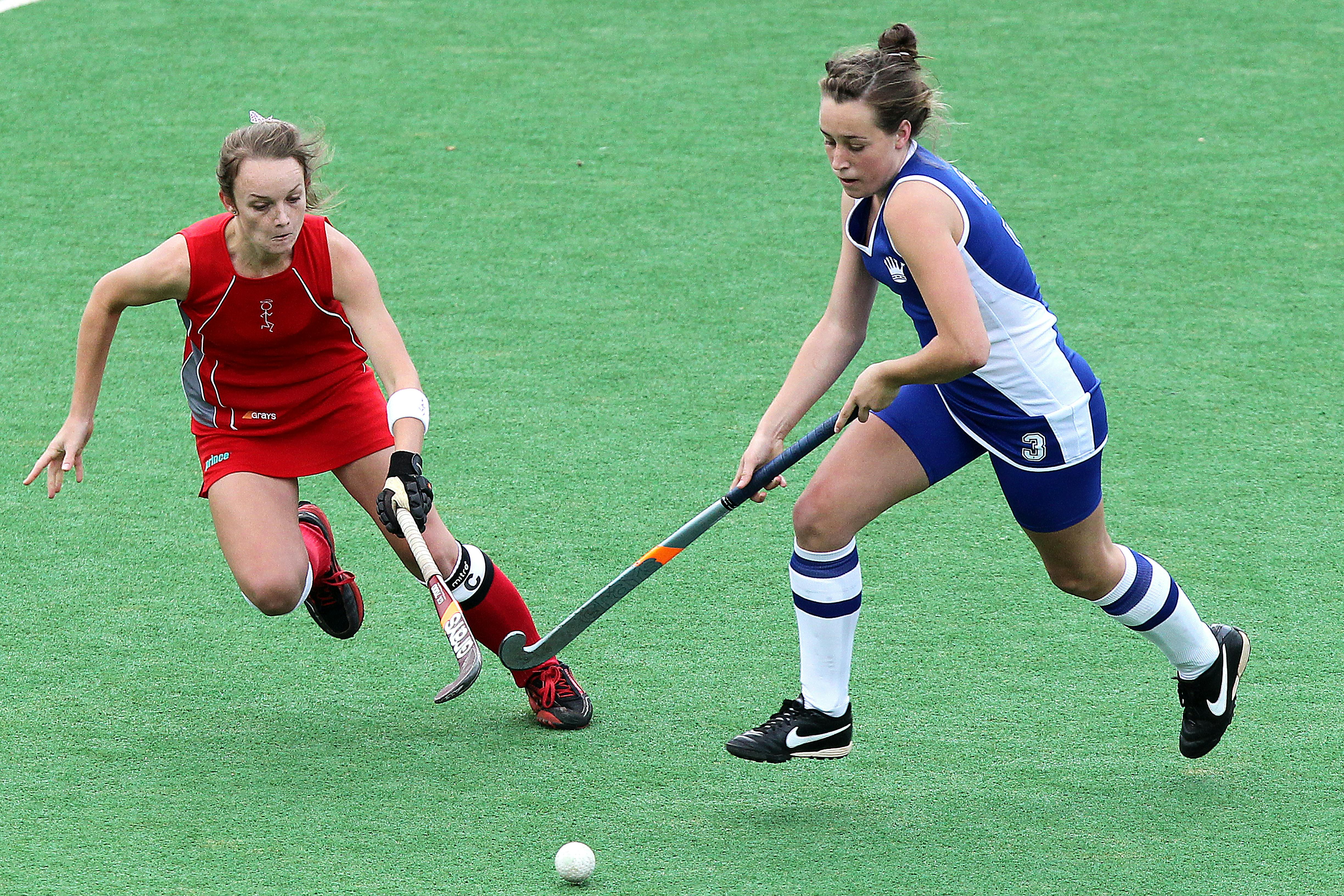

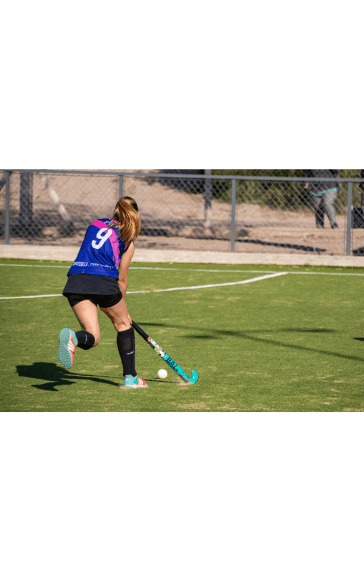
Stay Ahead of the Game — Join our Parent Insider List
Get expert tips, NCAA recruiting insights, and early access to new guides — straight to your inbox.
Your privacy is important to us. You'll only receive valuable content and updates from us.